
Kenyan Running Secrets: Why Hard Training Wins

Updated: Aug 18
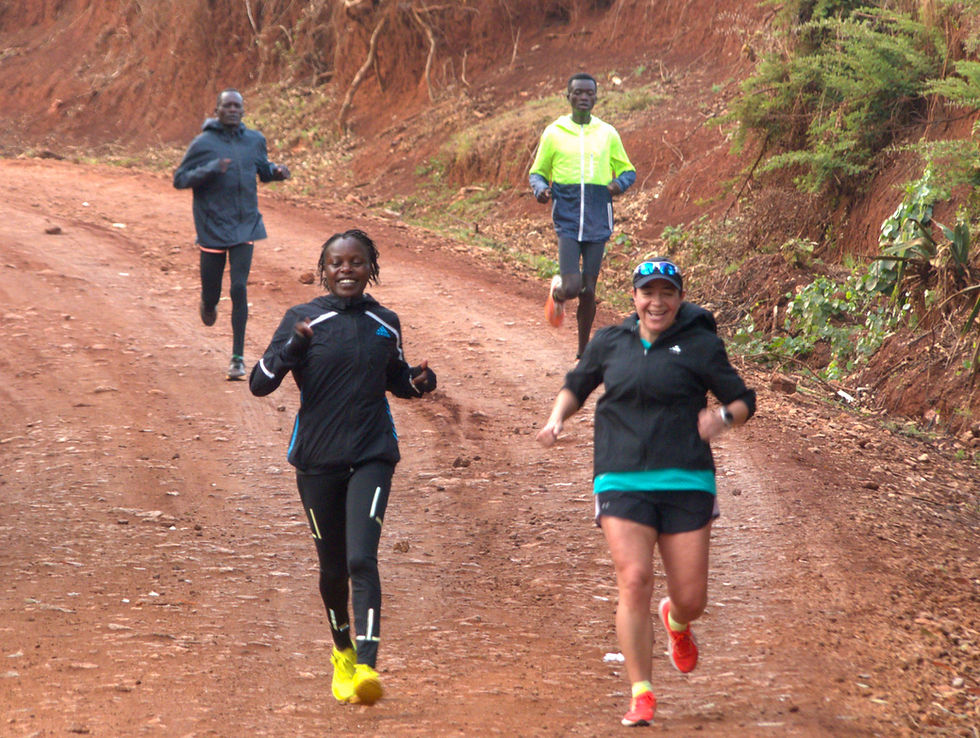
Kenyan runners often embrace hills, altitude and discomfort because training is viewed as a stimulus for adaptation, not validation. Smart training prioritizes purpose, recovery, consistency and long-term performance.
In the high-altitude hills of Kenya, where thin air meets relentless terrain, a distinct philosophy of endurance training continues to shape some of the world’s greatest runners. At Kenya Camp, Coach Hugo is unpacking a question that has long intrigued athletes worldwide: Why do Kenyan runners consistently embrace harder training conditions while many foreign runners seek easier paths and which approach truly leads to peak performance?
The answer, according to athletes and experts working closely with elite runners, goes beyond physical conditioning. It touches on psychology, culture and the very purpose of training itself. As global participation in endurance sports surges and more athletes travel to high-performance hubs like Kenya, understanding these contrasting approaches has never been more relevant. This story explores the philosophy behind Kenyan training methods, the science of stimulus and recovery, and what runners everywhere can learn from this divide.
The Question That Sparked the Debate
The conversation began with a simple but revealing question posed by Coach Hugo at Kenya Camp. Seeking deeper insight, he turned to Julian Alonso, a physiotherapist from Argentina working with the FAR team in the camp.
Alonso’s response was striking in its clarity:
“Kenyans like to go the hard way, and many foreign runners like to go the easy way.”
That observation, while broad, captures a recurring pattern seen by coaches and sports scientists across elite training environments. Kenyan runners, particularly those based in high-altitude regions such as Iten and Eldoret, often request more challenging routes—finishing long runs uphill or deliberately choosing rugged terrain. In contrast, many visiting athletes opt for flatter routes or even downhill stretches to maintain speed and comfort.
But why?
Training as Stimulus, Not Performance
At the core of this difference lies a fundamental misunderstanding about the purpose of training.
“Training is a stimulus of the body and the mind,” Coach Hugo explains. “When followed by adequate recovery, it leads to progress.”
This principle is well-established in exercise physiology. The body adapts to stress—whether from altitude, resistance or endurance—by becoming stronger, more efficient and more resilient. However, that adaptation only occurs when athletes embrace discomfort rather than avoid it.
Kenyan runners appear to internalize this concept deeply. Rather than measuring success by pace alone, they focus on the long-term outcome: improved strength, endurance and race readiness.
Foreign runners, by contrast, often fall into what coaches describe as “performance validation mode”—using training sessions to confirm their current fitness level rather than to build it.
The Psychological Divide
Many runners, especially those training with data-driven tools like GPS watches, become overly attached to pace metrics. A slower run can trigger anxiety, even when there is a valid reason—such as altitude or hilly terrain.
Coach Hugo has observed this pattern over decades.
“In the last 16 years as a coach, I’ve seen many runners constantly evaluating their training based on how they are doing,” he says. “They feel uncomfortable when they run slower than they used to.”
This mindset can lead athletes to avoid challenging conditions that naturally reduce speed, such as hills or high altitude. Instead, they seek flatter routes to maintain familiar pacing, inadvertently limiting the training stimulus.
Kenyan runners, however, tend to detach from pace as a primary metric during training. For them, effort and environment take precedence over numbers.
The Altitude Effect
Altitude plays a crucial role in this equation.
At elevations above 2,000 meters (6,500 feet), oxygen levels drop significantly, making it harder for muscles to perform at the same intensity as at sea level. Studies have shown that endurance performance can decrease by up to 10% at such heights.
Coach Hugo recalls his first experience training in Kenya in 2000 . At home in the Netherlands, I was running around 3 minutes per kilometer,” he says. “In Kenya, I never ran faster than 3:20, often 3:30 even when pushing hard.”
Yet, he wasn’t concerned.
“I knew I was in one of the best training environments in the world,” he says. “I focused on training, recovery and consistency not on speed.”
That mindset reflects a broader understanding among Kenyan athletes: slower times in training do not equate to regression. Instead, they are part of a larger adaptation process that ultimately leads to improved performance at lower altitudes.
The Role of Terrain
Hills add another layer of complexity and benefit.
Running uphill increases muscular engagement, particularly in the glutes, hamstrings and calves. It also improves cardiovascular capacity and running economy. Downhill running, meanwhile, enhances eccentric strength and stride efficiency.
By incorporating hills into daily training, Kenyan runners build a more complete athletic profile.
Alonso highlights this contrast vividly:
“When I take my team for a long run, they ask if we can finish uphill—to make it tougher.”
For many foreign runners, that request would seem counterintuitive. But for Kenyan athletes, it is a natural extension of their philosophy: embrace difficulty to maximize growth.
When Flat Training Makes Sense
That is not to say flat training has no place.
There are strategic moments particularly before races like the Berlin Marathon, known for its flat course when specificity becomes important. Athletes may incorporate flat runs to simulate race conditions and fine-tune pacing.
Coach Hugo acknowledges this balance.
“If you’re preparing for a flat race in two weeks, it makes sense to train on flat roads,” he says. “But if you’re doing it just to feel good about your speed, then you’re making the wrong choice.”
The distinction is critical. Training decisions should be driven by performance goals, not emotional comfort.
A Cultural Perspective
The Kenyan approach is also shaped by culture.
Running in Kenya is often seen not just as a sport, but as a pathway to opportunity. Many athletes grow up running long distances daily often on uneven terrain long before entering formal training programs.
This background fosters resilience, discipline and an intrinsic acceptance of hardship.
Additionally, training in groups a hallmark of Kenyan running culture creates a supportive yet competitive environment. Athletes push each other, normalizing high-effort sessions and reinforcing the idea that discomfort is part of progress.
What the Science Says
Modern sports science supports many aspects of the Kenyan model.
Research on “live high, train high” and “train low” strategies has shown that altitude training can improve red blood cell production and oxygen efficiency. Similarly, high-intensity and resistance-based endurance training often achieved through hills has been linked to improved running economy. However, experts also caution against overtraining. Without proper recovery, excessive stress can lead to injury or burnout.
This is where the Kenyan model offers another lesson: balance.
At Kenya Camp, the routine emphasizes not just hard training, but also rest, nutrition and recovery. Athletes often follow a structured day: morning run, rest, afternoon session, followed by proper meals and sleep.
Which approach is best?
The answer lies somewhere in between but leans heavily toward the Kenyan philosophy.
Training should prioritize stimulus over validation. Athletes must be willing to slow down, embrace discomfort and trust the process. At the same time, strategic planning and recovery remain essential.
For recreational runners and elites alike, the takeaway is clear: chasing pace in every session may feel satisfying in the short term, but it often comes at the expense of long-term growth.
As the sun rises over Kenya’s rolling hills, the runners of Kenya Camp continue their quiet pursuit of excellence one uphill stride at a time. Their philosophy, rooted in effort over ego, offers a powerful lesson in an era increasingly dominated by data and instant feedback.
The question is no longer just about who trains harder, but who trains smarter. And as more athletes seek answers in places like Kenya, the global running community may be shifting toward a deeper understanding of what true progress looks like.
In the end, the path to becoming stronger may not be the fastest one but it is almost certainly the harder one.


Comments