
Top Training Benefits in Kenya: Elevate Your Running Experience

Updated: Sep 8
For runners looking to improve endurance, speed, marathon performance, or simply experience a different approach to training, training in Kenya offers a unique opportunity. And when you train in Iten, one of the world's most famous running destinations, you're not just visiting another training location. You're stepping into a running culture that has produced generations of outstanding distance runners.
Iten sits at approximately 2,400 metres (7,874 feet) above sea level and is widely known as the "Home of Champions." The combination of altitude, challenging terrain, structured training, experienced coaching, and a strong running community makes it a fascinating destination for runners of different abilities.
At Kenya Camp the experience goes beyond simply completing a series of hard workouts. You learn how to train, recover, pace yourself, and approach running with greater discipline and consistency.
So, what makes training in Kenya so valuable for runners?

Why Training in Kenya Is Different
Kenya has become famous for producing world-class distance runners, particularly in events such as the 5K, 10K, half marathon, and marathon. While there's no single secret behind Kenyan running success, the environment and running culture provide an interesting combination of factors.
One of the biggest differences is the altitude.
At around 2,400 metres above sea level, Iten has less available oxygen than locations at sea level. When you train at altitude, your body has to work harder to deliver oxygen to your muscles. Over time, your body can adapt to the lower-oxygen environment.
For runners, this can make altitude training an interesting tool for developing aerobic fitness and endurance when incorporated properly into a broader training programme.
But altitude alone isn't the magic ingredient. After all, simply arriving in Kenya doesn't automatically make you faster!
The real value comes from combining the environment with sensible training, recovery, coaching, nutrition, and consistency.
The High-Altitude Training Advantage
One of the major reasons runners travel to Iten is the opportunity to train at altitude.
The reduced oxygen availability challenges your aerobic system. With appropriate acclimatisation and training, your body responds to the environment through several physiological adaptations that can support endurance performance.
This can be particularly valuable for runners preparing for longer events.
However, altitude training also requires patience. You can't arrive on Monday, run your hardest workout on Tuesday, and expect your body to be thrilled about it.
Your first priority should be adaptation.
At Kenya Camp, runners can progressively adjust to the environment before taking on more demanding sessions. This allows the training experience to be structured around the individual's fitness and response to altitude rather than simply following a one-size-fits-all approach.
Train in the Home of Champions
Imagine heading out for your morning run and seeing groups of highly committed runners moving along the same roads and trails.
That's part of what makes Iten special. The town has a deep running culture. Running isn't treated simply as a weekend hobby. It's part of everyday life for many athletes. This environment can change your perspective. When you're surrounded by runners who take their training seriously, getting out for that early morning run suddenly feels a little easier. You start seeing consistency differently. You notice how athletes approach easy runs, workouts, recovery, and daily routines.
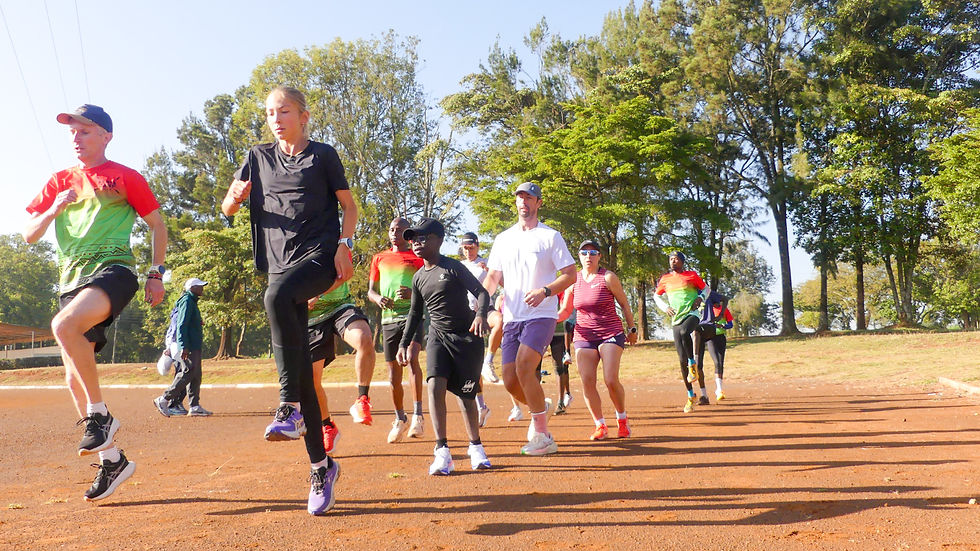
At Kenya Camp, you get the opportunity to experience this culture directly. You can train with fellow camp participants, interact with local runners, observe training routines, and learn from athletes who have made running a major part of their lives. Sometimes the biggest lesson isn't a complicated workout. It's simply seeing how consistently good runners show up.
Expert Coaching and Structured Training
Another major benefit of training at Kenya Camp is having access to structured coaching.
Training harder isn't always the answer. Training smarter matters just as much. A well-designed programme can combine different types of sessions, including endurance running, tempo work, intervals, hill training, easy runs, strength work, and recovery. The goal is to gradually develop the qualities you need for your target race while managing fatigue. For example, a marathon runner may need to focus heavily on aerobic endurance and sustainable pacing, while a shorter-distance runner may place greater emphasis on speed and running economy. This is where experienced coaching becomes important.
Instead of simply collecting kilometres, you learn why you're doing particular sessions and how they fit into the bigger picture.
Personal Pacers Can Change Your Training Experience
Pacing is one of those skills that looks easy until you actually have to do it during a hard workout.
Go too fast and you may struggle to finish the session. Go too slowly and you may not get the intended training effect.
Training alongside experienced runners or using personal pacers can help you understand what controlled pace actually feels like. A good pacer can help you maintain rhythm, avoid unnecessary surges, and stay focused when fatigue starts building. More importantly, you begin learning how different paces feel rather than relying entirely on your watch. That awareness can become extremely useful when you return home and start training independently.
Building Endurance Through Kenyan Terrain
The roads and trails around Iten provide another valuable training element. Instead of running on perfectly flat surfaces every day, runners encounter rolling terrain, dirt roads, trails, and hills.
This variety can challenge your legs and aerobic system in different ways. Hill running, in particular, can help develop strength and improve your ability to maintain effort when the terrain becomes difficult.
For marathon runners, this can be useful because races don't always follow perfectly flat routes. Learning to control effort on climbs and recover efficiently afterward can improve your overall running strategy.
And let's be honest—those hills can make your usual training route back home look surprisingly friendly!
The Mental Benefits of Training in Kenya
Running is physical, but performance is also mental. There will be days when your legs feel heavy, the workout doesn't go according to plan, or you simply don't feel motivated. Training in a challenging environment teaches you how to respond to those moments. Altitude, hills, unfamiliar terrain, and demanding workouts require patience and concentration. You learn to respect your body while also learning when it's appropriate to push. This can strengthen your mental approach to training.
You begin to understand that progress isn't always about running faster. Sometimes progress means completing a difficult session sensibly, recovering properly, or choosing patience instead of ego.
Those lessons can stay with you long after you leave Kenya.
Training Benefits for Beginners and Experienced Runners
You don't need to be an elite athlete to benefit from training in Kenya. Beginners can gain valuable exposure to structured training, running technique, pacing, recovery, and consistency. Intermediate runners can use the experience to break through training plateaus and develop greater endurance.
Experienced marathoners and competitive runners can use the environment to sharpen specific aspects of their preparation. The key is having realistic expectations. Training in Kenya isn't about copying an elite runner's schedule. It's about learning from the environment and adapting the experience to your own goals and fitness level.
Nutrition, Recovery and Daily Routine
Training isn't just about running. Your body needs enough energy to handle the workload, especially when you're training at altitude. A balanced diet containing carbohydrates, protein, healthy fats, vitamins, and minerals can support training and recovery. Staying hydrated is equally important. Recovery should also be treated as part of the programme rather than something you do only when you're exhausted.
Adequate sleep, easy days, mobility work, nutrition, and sensible training progression all contribute to adaptation. One of the valuable lessons many runners discover in Kenya is that recovery isn't laziness.
It's training.
How to Make the Most of Your Kenya Running Camp
If you're planning a training camp in Kenya, preparation can make a big difference. Arrive with enough time to adjust to the altitude instead of immediately attempting your hardest workout. Listen to your coach and, more importantly, listen to your body. Stay hydrated throughout the day and maintain regular meals. Don't underestimate the importance of sleep. Avoid comparing yourself constantly with other runners. Someone else's pace is someone else's pace. Most importantly, stay curious. Talk to other runners. Observe how experienced athletes train. Ask questions. Learn how they approach easy runs, workouts, recovery, and race preparation. You may return home with more than a few good workouts in your training log. You may return with a completely different understanding of running.
Why Training in Kenya Can Be a Life-Changing Experience
The biggest benefit of training in Kenya may not be one particular workout or physiological adaptation.
It's the complete experience. You wake up in a place where running is deeply embedded in the culture. You train at altitude. You run on challenging terrain. You work with experienced coaches. You meet runners from different backgrounds. You learn about pacing, recovery, nutrition, and discipline. And somewhere along the way, you may discover something about yourself as a runner. Perhaps you realise you can handle more than you thought. Perhaps you learn that slowing down can actually make you better. Or perhaps you simply rediscover why you started running in the first place. That's what makes running training in Kenya so compelling. It's not just about chasing a faster time. It's about becoming a more knowledgeable, disciplined, confident, and resilient runner.
Frequently Asked Questions About Training in Kenya
Is Kenya good for marathon training?
Yes. Kenya offers a combination of altitude, varied terrain, strong running culture, experienced coaching, and training communities that can be valuable for marathon preparation. Iten is particularly popular among endurance runners.
What altitude is Iten?
Iten is located at approximately 2,400 metres (7,874 feet) above sea level. The altitude is one of the main reasons runners travel there for training.
Do I need to be an advanced runner to join a Kenya running camp?
No. Training camps can be suitable for runners at different levels, provided the programme is adapted to their fitness, experience, and goals. You don't need to be an elite athlete to benefit from the experience.
How long should I train in Kenya?
The ideal duration depends on your goals, previous altitude experience, fitness, and training schedule. A structured camp lasting several days can provide valuable exposure, while longer stays may allow more time for acclimatisation and progressive training.
Will altitude training automatically make me faster?
No. Altitude is a training environment, not a shortcut. Your results depend on factors such as training quality, recovery, nutrition, genetics, race preparation, and how your body responds to altitude.
Is training in Kenya difficult?
It can be challenging, especially during the initial adjustment to altitude. The terrain and training environment can also be demanding. However, with appropriate progression and coaching, the challenge can become an important part of the experience.
What should I bring to a Kenya running camp?
Bring suitable running shoes, lightweight and warm clothing, hydration equipment, recovery gear, sunscreen, personal medication if required, and appropriate travel documents. Your camp organiser should provide specific packing recommendations before departure.
Can I train with Kenyan runners?
Depending on the camp programme and local arrangements, runners may have opportunities to train alongside local athletes. This is one of the most memorable aspects of the Kenya running experience.
Training in Kenya is about much more than running at altitude. It's about stepping into a different running environment and learning from it. From the high-altitude roads of Iten to the strong local running culture, structured coaching, challenging terrain, personal pacing, and supportive training community, Kenya offers runners an experience that's difficult to recreate elsewhere. Whether you're preparing for your first marathon, chasing a personal best, building endurance, or simply looking for a new challenge, a Kenya running camp can give you the opportunity to train differently and think differently about your running. So, are you ready to leave your usual training route behind for a while?
Pack your running shoes, arrive with an open mind, respect the altitude, trust the process, and enjoy the journey.
Because sometimes the best way to move forward as a runner is to change your surroundings—and see what you're capable of.


Comments